Wedding Invitation Element: Graphics for Web Elements & Handmade Brands
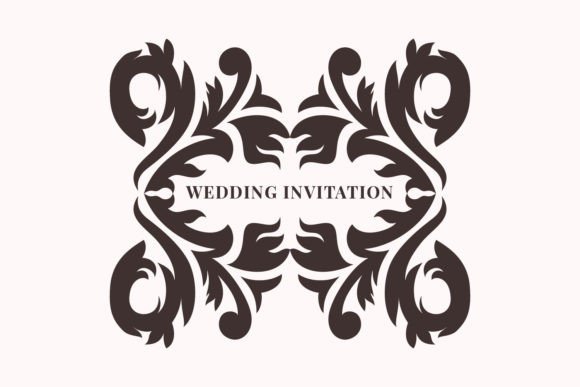
As someone who’s shipped over 3,000 custom wedding-themed products—from hand-lettered gift tags to sublimated mugs and Cricut-cut vinyl tote bags—I opened Wedding Invitation Element expecting another generic floral frame. What I got was a quiet, confident standout: an abstract tribal flora motif rendered in warm flat brown, with the soft imperfection of hand-drawn linework and the structural clarity of a vector paper sketch. It doesn’t scream “wedding”—it whispers bohemia, vintage elegance, and intentional craft. This isn’t for the glitter-and-script crowd. It’s for the bride who wears leather sandals with her lace gown, the boutique owner curating earthy, tactile branding, and the Etsy seller building a cohesive seasonal collection around authenticity—not trends.
A First Impression That Sells Before You Cut or Print
The mood is grounded, feminine but unfussy—rustic without being farmhouse, vintage without feeling dated. The tribal flora hints at movement and organic rhythm; the isolated vintage floral frame gives instant layout structure. Because it’s delivered as clean vector files (SVG) plus high-res PNG with transparency, it dropped right into my Cricut Design Space and Silhouette Studio without jagged edges or missing layers. No re-tracing. No panic before a craft fair deadline. That alone saves me 20 minutes per project—and when you’re juggling customer orders, market prep, and inventory photos, time is your most non-renewable resource.
Where Wedding Invitation Element Shines in Real Crafting Workflows
- Cricut & Silhouette projects: Perfect for layered vinyl on matte white mugs, distressed wood signs, or removable wall decals for bridal showers. The flat brown reads beautifully on cream kraft paper or uncoated cardstock—no color shift surprises.
- Sticker & planner design: Works exceptionally well at 2–3” sizes on kiss-cut sticker sheets. The line weight holds up, and the open negative space prevents bleeding during printing. I’ve used it as a focal frame for “Thank You” gift tags and as a subtle border on weekly planner pages.
- Mug, tumbler wrap & apparel design: As a sublimation design, it scales cleanly from 4” coaster size to full-wrap tumblers. Tested on both white and light gray sublimation blanks—no loss of detail or muddy edges.
- Printable design & digital product bundles: Included it in a “Boho Wedding Planner Kit” PDF bundle. Paired with minimalist serif headers and handwritten script accents, it elevated the entire aesthetic without overwhelming text-heavy pages.
- Small business branding: Adapted one corner motif as a boutique logo label for handmade soap wraps and linen pouches. Feels artisanal, not stock—exactly what customers pay a premium for.
Where to Use It Thoughtfully—Not Just Automatically
This graphic design asset isn’t magic dust. It needs intention. Avoid using Wedding Invitation Element for:
- Sub-1” sticker cuts—fine inner details (like delicate vine intersections) may not register cleanly on budget vinyl cutters or lower-DPI printers.
- Overly dense compositions—its charm lies in breathing room. Don’t crowd it with heavy typography or competing patterns unless you simplify first.
- Dark-on-dark applications without contrast testing—flat brown on charcoal fabric or navy cardstock can fade visually. Always preview on real mockups, not just screen thumbnails.
- Multi-layered vinyl projects requiring precise alignment—the illustration is single-layer vector, so stacking colors requires manual separation if you’re aiming for dimensional depth.
Practical Crafter Notes You’ll Actually Use
I treat every new graphic design asset like a raw material—not just decoration. Here’s how I vet Wedding Invitation Element before listing anything:
- Test the SVG in Design Space: Ungroup, zoom to 400%, check for stray anchor points or double lines that cause double-cuts.
- Preview PNG transparency: Drop it onto black and white backgrounds in Photoshop or Canva—confirms no hidden white fill or fringing.
- Confirm resolution for sublimation: At 300 DPI and scalable vector origin, it passed my print test on a Sawgrass SG400—but always run a small test tile first.
- Check licensing upfront: Verified commercial license covers physical handmade products, Etsy listings, and print-on-demand—but not resale as standalone clipart. Critical for Etsy sellers avoiding policy flags.
- Pair intentionally: It sings with serif fonts (like Playfair Display) for elegance, or clean sans serifs (like Montserrat) for modern contrast. Avoid overly ornate scripts—they compete rather than complement.
- Resize strategically: On 5”x7” printable invitations, I use it at 85% scale with generous margins. For 12”x12” scrapbook paper, I enlarge to 120% and let the texture breathe.
Why This Fits Your Handmade Business—Not Just Your Mood Board
If you sell at craft fairs or list on Etsy, consistency builds trust. Wedding Invitation Element isn’t just a pretty frame—it’s a brand anchor. I’ve reused its core motif across thank-you cards, packaging tape seals, Instagram story highlights, and even a simple embroidered patch for vendor gift bags. That cross-product cohesion tells customers: *This isn’t random. This is curated.* It supports storytelling—whether you’re launching a boho bridal collection or refreshing your small business branding for spring markets. And because it’s delivered as versatile graphics (SVG, PNG, EPS), it lives beyond one platform or tool. It moves with you—from Cricut to Canva to Procreate to your printer tray.
Real talk: Not every graphic design asset earns repeat use. But Wedding Invitation Element has lived in my active assets folder for six months straight. It’s been on 14 different product types. It’s helped convert three wholesale inquiries. And it still feels fresh—not because it’s flashy, but because it’s thoughtfully made for real hands, real tools, and real handmade businesses.