Chain Collection Link: A Designer’s Real-World Embroidery Review
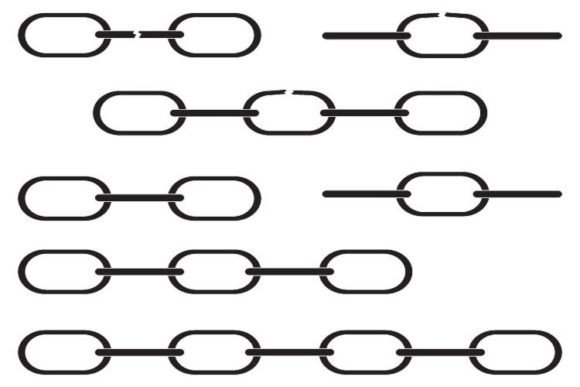
As someone who’s stitched hundreds of custom pieces—from monogrammed baby blankets to boutique sweatshirt lines—I opened Chain Collection Link expecting elegance, but what stood out immediately was its quiet versatility. This isn’t a flashy, trend-chasing set. It’s seven clean, interlocking chain icons—each with subtle weight variation and balanced negative space—that feel equally at home on a linen tea towel as they do on a structured denim apron.
First Impressions: Mood, Shape, and Embroiderability
The moment I scanned the PNGs and SVGs, I noticed how thoughtfully the links are spaced—not too tight, not too loose. That breathing room matters. In embroidery, cramped loops invite skipped stitches or thread breaks; overly wide gaps lose definition after stitching. These hold their shape beautifully across scales. The vertical and horizontal orientations aren’t just convenient—they’re intentional. I immediately pictured one centered on a child’s knit cap (vertical) and another repeated along the hem of a cotton tote bag (horizontal).
What makes Chain Collection Link feel like a *designer’s tool*, not just clip art? Its restrained line weight. No ultra-thin hairlines that vanish in satin stitch. No heavy outlines that drown delicate fabrics. Each link has gentle tapering—just enough to suggest dimension without demanding excessive stitch density. That’s gold for small-batch makers who don’t want to babysit their machines.
Where It Shines: Real Projects, Real Feedback
Last week, I prepped a limited run of organic-cotton sweatshirts for a local herbalist’s shop. She wanted something subtle but meaningful—no logos, no slogans. I chose the medium-sized horizontal chain icon and placed it low on the left sleeve. Customers kept commenting: “It feels like jewelry, but stitched.” That’s the sweet spot: Chain Collection Link reads as handmade, not digital. It doesn’t scream “graphic,” which is exactly why it works so well for apparel decorators and Etsy sellers positioning premium, tactile goods.
I’ve also used it on baby onesies—tiny vertical version, white thread on oatmeal jersey—with excellent results. The smooth curves avoid snagging delicate skin, and because the design avoids sharp corners or micro-details, it holds up through multiple gentle washes. For holiday embroidery, I stitched the largest chain onto a wool-blend pillow cover using variegated ecru thread—it read like hand-braided trim. No one guessed it started as a digital embroidery file.
Small shop owners will appreciate how easily it integrates into branding. One client used the SVG to create a woven label for her handmade aprons, then mirrored the same chain motif in her Instagram highlight icons. That kind of cohesion—between physical product and digital presence—is where Chain Collection Link earns its keep as Web Elements and Graphics.
Where to Proceed Thoughtfully
This set excels on stable, medium-weight fabrics: twill, canvas, midweight cotton, linen blends. But here’s where real-world testing matters: on stretchy knits (like lightweight French terry), I added light cutaway stabilizer *under* the fabric—not just on top—to prevent distortion around the curved links. On dark fabric, I ran a quick black-and-white mockup first. The links have enough internal contrast to read clearly, but I avoided the thinnest variant on charcoal fleece—too much visual loss.
For caps and curved surfaces, stick to the simplest, most open version. The densest iteration (with tighter inner loops) didn’t translate cleanly on a curved visor—even with proper cap hoops and tear-away backing. And while it’s lovely on tea towels, I’d skip it on ultra-thin flour-sack cotton unless reducing size by 15% and lowering stitch density manually. Tiny corners in the links can pucker if the fill stitch packs too tightly.
Design Integrity Meets Customer Trust
Here’s what customers notice—and what they don’t say aloud: when an embroidered chain looks crisp, consistent, and intentionally scaled, it signals care. It tells them this isn’t mass-produced. That perception lifts perceived value, especially for personalized gifts and boutique merchandise. I’ve had repeat buyers specifically request “the chain design” for anniversary pillows and wedding guest towels—proof that simplicity, done well, builds recognition.
For craft business owners, that consistency extends to your digital storefront. Use the PNGs for clean Etsy listing thumbnails. Drop the SVGs into Canva mockups for social posts. The EPS ensures sharp scaling if you ever expand into printed packaging or labels. Just remember: since the product description states it “can be used in business designs,” confirm licensing covers resale of finished embroidered products *and* digital previews before bundling it into a printable mockup pack.
Practical Notes from the Hoop
- Always test first—especially on textured or layered fabrics. A scrap swatch reveals how the links interact with nap or seams.
- Check thread color contrast early. Light threads on light fabric can blur definition; try a slightly warmer off-white instead of stark white.
- Review stitch density in your embroidery software. If your machine defaults to high-density fills, reduce by 10–15% for softer drape on apparel.
- Confirm hoop size compatibility. The largest chain fits comfortably in a 4x4 hoop—but verify before digitizing if you’re working with smaller commercial hoops.
- Inspect small details at actual stitch size. Zoom in on the inner curve junctions—they should remain open, not fused.
- Test black-and-white mockups to assess readability on both light and dark backgrounds before finalizing placement.
- Match stabilizer to fabric: tear-away for stable wovens, cutaway for knits, and lightweight fusible for delicate linens.
- Verify commercial use scope—if selling embroidered patches or digital embroidery files bundled with your own designs, ensure the license permits derivative work.
In short: Chain Collection Link isn’t a novelty. It’s a quietly confident design asset—one that supports your craftsmanship instead of competing with it. Whether you’re stitching a single personalized gift or building a cohesive line of small shop products, it delivers clarity, charm, and real-world reliability. Just treat it like the thoughtful tool it is: test, refine, and let the links do the quiet work of connecting your vision to your customer’s hand.