Green Alien Inside Human Head: Graphics & Illustrations Review
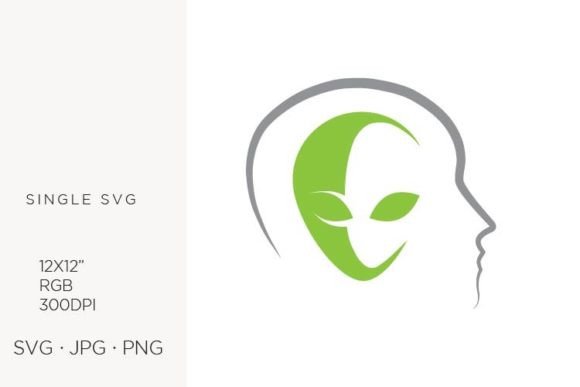
As a graphic designer who’s built brand identities for indie skincare lines, launched seasonal Cricut craft collections, and developed packaging for Etsy-based handmade businesses, I approach every design asset with one question: Does this elevate the client’s story—or just fill space? When I first opened Green Alien Inside Human Head, I paused—not because it’s shocking (though it is), but because it’s intentional. This isn’t random surrealism. It’s a tightly composed single vector artwork that balances whimsy with structural clarity: a stylized human head in profile, transparent enough to reveal a playful yet anatomically suggestive green alien nestled inside the cranium. The line work is confident, the negative space deliberate, and the color palette intentionally limited—just two tones plus transparency. That restraint makes it unusually versatile.
A Mood That Fits Boutique Branding—Not Corporate Boardrooms
Green Alien Inside Human Head instantly signals curiosity, gentle irreverence, and cognitive playfulness. It leans into “mind-bending” without veering into edgy or alienating territory—ideal for clients whose audience values authenticity over polish: think indie podcasters exploring psychology, wellness brands reframing mental health, or handmade stationery shops celebrating quirky self-expression. I recently sketched a concept for a local bookstore’s “Unconventional Minds” author series—and this illustration landed perfectly as a hero graphic on their Instagram carousel and event flyer. It didn’t compete with typography; it framed it. That’s rare for an illustration with this much personality.
Where It Shines in Real Client Projects
- Logo design & brand identity: Works best as a secondary mark or icon within a larger system—not a standalone wordmark, but a memorable visual anchor for sub-brands or campaign extensions (e.g., a “Mindful Oddities” product line).
- Packaging design & product labels: Scales beautifully on sticker sheets, soap wraps, and tea box accents—especially when paired with clean sans serif type and muted earth tones.
- Printable design & wall art: As a vector, it prints crisply at any size. I tested it on matte poster paper and glossy sticker stock—no pixelation, no stroke distortion.
- Social media graphics & Canva templates: Its strong silhouette and high-contrast shape make it ideal for Pinterest pins and Instagram Stories where quick recognition matters.
- Cricut project & sublimation design: Clean SVG paths cut precisely on vinyl and transfer smoothly to mugs, tote bags, and notebooks—no overlapping nodes or hidden layers.
- Editorial design & blog visuals: Adds conceptual weight to articles about creativity, neuroscience, or unconventional thinking—without requiring explanation.
Where to Use It With Intention—Not Assumption
This isn’t a universal asset. Avoid dropping Green Alien Inside Human Head into minimalist corporate branding, law firm websites, or medical product packaging—it disrupts visual trust where neutrality is expected. It also loses impact in crowded layouts (e.g., dense flyers with 12 other icons) or on low-contrast backgrounds (like light green on mint). And while it reads well at 300px wide on a mobile screen, don’t shrink it below 80px—it sacrifices legibility and charm. For t-shirt design, place it on chest or sleeve—not full-back prints—where its narrative detail can breathe.
Designer Notes You Can’t Skip Before Client Use
- Test in black and white: Confirm the alien’s internal contour remains readable without color—critical for embroidery, foil stamping, or monochrome print runs.
- Check contrast on light AND dark backgrounds: Preview the PNG with transparency against white, charcoal, and kraft paper mockups. Some green tones flatten on warm substrates.
- Scale it live: Drop it into your actual layout file—not just the preview window—at 25%, 100%, and 300% size. Vector doesn’t guarantee usability if stroke weights vanish at small sizes.
- Verify file integrity: Open the SVG in Illustrator—check for grouped layers, unexpanded strokes, and embedded raster elements (none should be present in a true vector). If only PNG is provided, confirm it’s 300 DPI and has crisp alpha transparency.
- Pair it thoughtfully: It harmonizes with geometric sans serifs (like Montserrat or Poppins), contrasts intriguingly with delicate script fonts (for invitation cards), and grounds expressive display fonts (think Bebas Neue headers). Avoid pairing with overly ornate serifs—they fight for attention.
- Confirm commercial license: This is non-negotiable. Ensure the license explicitly permits use in client-facing deliverables—including print-on-demand, digital ads, and resale of physical products like stickers or mugs. No “personal use only” loopholes.
Final Verdict: A Strategic Creative Asset—Not Just Clipart
Green Alien Inside Human Head isn’t clipart. It’s a considered creative design that carries tonal weight. In my workflow, it’s become a go-to for projects where the client needs to signal intelligence wrapped in approachability—like a science educator launching a YouTube series for teens, or a handmade candle brand naming a scent “Cerebral Moss.” It strengthens visual hierarchy by anchoring abstract concepts in something tangible and slightly surprising. It boosts audience engagement not through loudness, but through quiet intrigue. And because it’s a single vector artwork, it integrates cleanly across touchpoints—from web design to product mockups to editorial layouts—without demanding heavy retouching or stylistic compromise.
For designers building for Etsy sellers, small business branding, or creative marketplaces, this is more than an illustration. It’s a mood-setter, a conversation starter, and a commercially viable graphic design asset—if used with the same care you’d give a custom-drawn logo. Just remember: great design isn’t about what you add—it’s about what serves the story. And in that respect, Green Alien Inside Human Head earns its place in the working toolkit.