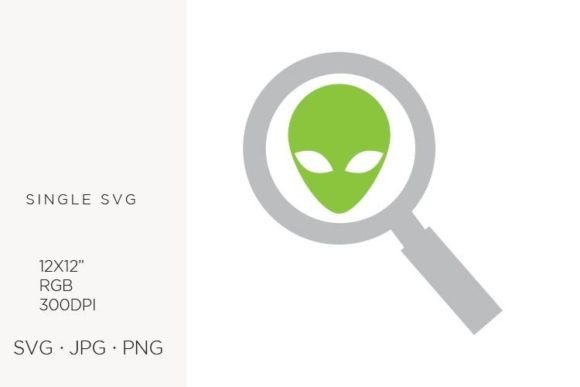
Alien Head Inside Magnification Glass
A Designer’s First Glance: Clever, Playful, and Surprisingly Versatile
When Alien Head Inside Magnification Glass landed in my inbox, I paused—not because it’s flashy or loud, but because it’s quietly intelligent. The composition is tight and intentional: a retro-futuristic magnifying glass framing a wide-eyed, softly detailed alien head with subtle shading and expressive features. It’s not cartoonish chaos; it’s curated curiosity. As an embroidery designer who tests hundreds of Illustrations each year, I immediately saw its potential—not as a standalone novelty, but as a thoughtful design asset for makers who value wit *and* wearability.
Real-World Test: Embroidering It on a Linen Kitchen Towel
Last week, I stitched Alien Head Inside Magnification Glass onto a heavyweight natural linen tea towel—exactly the kind sold in indie boutiques and Etsy shops as “science-themed hostess gifts.” I used medium-weight cutaway stabilizer, 40-weight rayon thread, and kept stitch density moderate to avoid stiffness. The result? Crisp edges around the glass rim, smooth satin-stitched curves on the alien’s face, and just enough texture in the fill stitches to suggest depth without bleeding into the fabric. Customers love that “aha” moment when they recognize the theme—it’s clever enough for adults, friendly enough for kids, and never cloying. That’s rare in Graphics meant for handmade products.
Where It Shines (and Where It Needs Care)
Alien Head Inside Magnification Glass works beautifully across several embroidery contexts—but not all equally:
- Custom apparel: Ideal for sweatshirt sleeves, tote bag corners, or apron pockets. Its compact shape fits standard hoops without scaling down into illegibility.
- Baby embroidery: Softened color palettes (mint + cream, pale yellow + oat) make it perfect for nursery decor—think pillow covers or organic cotton onesies. Just avoid dense fill areas near seams where stitching could irritate sensitive skin.
- Embroidered patch: Excellent candidate for iron-on or sew-on patches. The clean outer circle acts as a natural border, and the inner detail reads well even at 2.5" diameter.
- Holiday embroidery: Surprisingly effective for quirky Halloween or sci-fi themed gifts—pair it with subtle metallic thread accents for a festive lift.
But be mindful: this isn’t a one-size-fits-all machine embroidery design. On thin or stretchy fabrics like lightweight knits or baby rib, the magnifier’s circular outline may distort if stabilizer isn’t firm enough. And on dark fabric, test contrast carefully—the alien’s pupils and glass highlights rely on tonal nuance, not just line weight. Avoid cramming it onto curved surfaces like cap fronts unless you’re confident in your digitizing adjustments or using a low-profile hoop.
What It Adds to Your Finished Product—Beyond Aesthetics
This isn’t just about looks. Alien Head Inside Magnification Glass elevates perceived value. Buyers notice craftsmanship in how cleanly the glass curve holds its shape, how evenly the alien’s facial features translate in satin stitch, and how the overall balance avoids visual clutter. That translates directly to trust—especially for Etsy sellers and small shop owners whose customers equate precision with professionalism. It also strengthens brand consistency if you use it across product lines: same motif on a printable mockup for your website, then stitched identically on a batch of embroidered patches and greeting cards. That cohesion tells buyers you’re intentional—not just assembling random clipart.
Practical Notes Every Embroidery Designer Should Check
Before committing to production—or listing a finished product—run these quick checks:
- Test on scrap fabric first, especially if using textured weaves (like burlap or terry cloth), where fine details can disappear.
- Review thread color contrast—try black thread on ecru linen, then white thread on navy denim. Does the alien’s expression stay readable?
- Inspect small details under magnification: Are pupil outlines crisp? Does the glass rim hold its curve without jagged vector artifacts?
- Confirm hoop size compatibility. While it’s a single vector artwork, your embroidery file’s actual dimensions depend on how it was digitized—don’t assume it fits a 4x4 hoop without verifying.
- Use proper stabilizer. Medium cutaway works for most woven fabrics; switch to tear-away only if stitching on stable, non-stretchy paper-based stationery or cardstock.
- Check licensing. Since it’s labeled for use in logos, wall art, and handmade craft items, confirm whether resale of finished embroidered goods (e.g., tote bags on Etsy) is permitted—and whether digital redistribution (as part of a craft bundle) falls within scope.
Why This Design Fits Real Creative Businesses
If you sell personalized gifts, run a craft fair booth, or list digital embroidery files alongside physical products, Alien Head Inside Magnification Glass bridges categories effortlessly. It’s equally at home on a hand-stamped invitation card and a professionally stitched sweatshirt. For apparel decorators, it’s a conversation starter—not just decoration. For digital product sellers, it’s a high-perception asset: minimal vectors with strong character tend to outperform busier graphics in customer previews and mockups. And for hobbyists turning passion into side income? It’s proof that playful doesn’t mean unpolished.
Final Thought: A Design That Earns Its Place
Not every embroidery file earns repeat use. Alien Head Inside Magnification Glass does—because it balances charm with clarity, personality with precision. It doesn’t shout. It invites closer inspection. And in embroidery—where every stitch carries intention—that’s the highest compliment a designer can give.