Ocean Waves Inside Human Brain
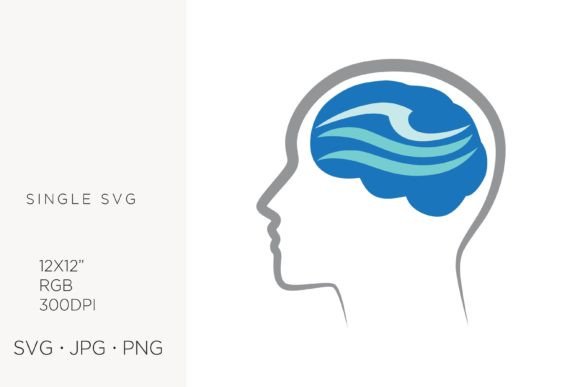
As a designer who’s stitched hundreds of custom pieces—from nursery wall hangings to boutique sweatshirts—I opened Ocean Waves Inside Human Brain expecting symbolism, not simplicity. What I found was quietly striking: a clean vector illustration where fluid waveforms curl precisely within the silhouette of a human brain. No clutter, no forced realism—just elegant duality. It doesn’t shout “science” or “ocean”—it invites quiet recognition. That balance makes it unusually versatile for embroidery—but only if you know *how* and *where* to place it.
A Tote Bag Test: Where Mood Meets Material
Last week, I prepped Ocean Waves Inside Human Brain for a limited-run embroidered tote bag series—intended for a local mindfulness studio. The client wanted something that felt thoughtful but wearable, symbolic but not clinical. I digitized the artwork at 3.8" wide (a comfortable hoop size for most mid-arm machines), using satin stitch for the outer brain contour and gentle fill stitch for the waves—keeping density moderate to avoid stiffness. On natural canvas, the result held breath: soft contrast, clear negative space, zero thread nesting. Customers didn’t just notice it—they paused. One said, “It feels like my therapist’s office, but in fabric.” That’s the design’s real strength: it communicates layered meaning without visual noise.
Where This Illustration Truly Shines in Embroidery
- Personalized gifts: Embroidered on organic cotton baby blankets or linen pillow covers, Ocean Waves Inside Human Brain reads as intentional—not trendy. It avoids cliché while still feeling warm and human.
- Small shop merchandise: As a subtle chest logo on unisex sweatshirts or aprons, it signals creativity and calm—ideal for yoga studios, therapy practices, or indie bookshops.
- Etsy listings: Paired with a clean printable mockup (light + dark fabric variants), this design stands out in search results for “thoughtful embroidery,” “mindfulness gift,” or “science-inspired decor.” Its vector origin means crisp scaling for digital previews.
- Holiday & wedding gifts: Stitched on tea towels or ceramic mug sleeves (via heat-transfer vinyl prep), it adds quiet sophistication—no glitter, no kitsch, just resonance.
Real Embroidery Limits You Can’t Ignore
This isn’t a one-size-fits-all embroidery file. Its elegance depends on restraint—and context.
On stretchy fabrics (like lightweight knits), the brain outline can distort if stabilizer is too light. I recommend medium-weight cutaway + topping for anything over 10% spandex. On dark fabrics, test thread colors first: navy or charcoal thread on black twill loses definition; off-white or heather gray pops with more nuance. And avoid placing it on curved surfaces like baseball caps unless you’re using a cap frame—those smooth wave curves won’t hold true on a rounded crown without re-digitizing.
The design also struggles silently on textured fabrics—burlap, heavy terry cloth, or bouclé wool. Those tiny wave details blur. Likewise, under 2.5", the inner waveforms start to merge visually. So skip it for tiny patches or children’s beanie logos unless you’re willing to simplify manually.
What It Does for Your Craft Business—Beyond Aesthetics
Ocean Waves Inside Human Brain subtly elevates perceived value. Because it’s not literal, it invites interpretation—and interpretation builds connection. Buyers don’t just buy a brain + waves; they buy a conversation starter, a personal metaphor, a quiet nod to complexity. That translates directly to higher engagement on Etsy listings, better photo storytelling for Instagram, and stronger repeat interest from clients who appreciate subtlety over slogans.
For handmade product sellers, it supports brand consistency without locking you into one niche. Use it on a baby onesie (“Little Mind, Big Waves”) and later on a therapist’s notepad cover—same design, different audience, same quiet authority.
Practical Designer Notes Before You Stitch
- Always run a test on scrap fabric matching your final garment’s weight and stretch—even if it’s “just canvas.”
- Check stitch density in the wave zones. Too dense? It’ll pucker. Too sparse? It’ll look sketched, not stitched.
- Review small corners—the brain’s frontal lobe curve and wave termini—under magnification. If they’re hair-thin in the vector, they’ll vanish in satin stitch unless widened slightly.
- Mock it up in black and white first. Does the shape read clearly without color? If not, adjust contrast or simplify before digitizing.
- Confirm licensing: this is a Graphics asset labeled for “handmade craft items” and “printed paper items.” For commercial embroidery resale (e.g., selling finished totes), verify whether redistribution rights apply—or if attribution is required.
- Use tear-away stabilizer for stable wovens, cutaway for knits, and always float topping on napped fabrics like fleece.
Final Thought: It’s Not Just an Illustration—It’s a Conversation Starter
I’ve passed on dozens of “clever” embroidery designs because they looked sharp on screen but fell flat after stitching—too busy, too fragile, too dependent on perfect lighting or ideal fabric. Ocean Waves Inside Human Brain avoids that trap. Its power lies in its quiet confidence: it doesn’t need embellishment, explanation, or trend alignment. It works because it respects the craft—both yours and the wearer’s.
Use it where attention matters more than volume. Where thoughtfulness sells. Where your customer isn’t just buying a product—they’re choosing a feeling, a symbol, a moment of pause. That’s rare. And that’s why, after years of reviewing digital embroidery files, this one stays in my active folder.