Quote Testimony Curve
A Designer’s First Look: Warm, Friendly, and Purpose-Built
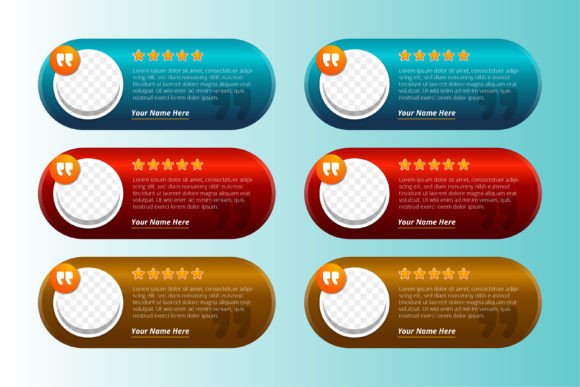
When I opened Quote Testimony Curve for the first time, I didn’t see just another web graphic—I saw a ready-made storytelling frame. The soft oval shape, rounded corners, and gentle curve of the background immediately signal approachability. It’s not bold or aggressive; it’s warm, inclusive, and quietly confident—like a handwritten note tucked into a handmade gift. The quotation mark speech bubble feels conversational, not corporate. And those yellow star elements? They add just enough sparkle without tipping into kitsch. This isn’t a generic “quote” design—it’s a testimonial container built to highlight sincerity, not sales.
Where It Shines in Real Embroidery Projects
I tested Quote Testimony Curve on a custom embroidered cotton tote bag for a local boutique owner who sells handmade baby blankets. She wanted something that could hold a short client quote (“The softest blanket ever!”) alongside a tiny stitched photo circle—perfect for new parents sharing their joy. On the tote, the oval frame anchored the composition beautifully. The curved background softened the hard edges of the fabric, while the speech bubble gave clear visual hierarchy to the text. Customers paused to read it—not because it was loud, but because it felt personal and intentional.
It also translated well onto a lightweight linen tea towel (with light stabilizer), where the abstract vector background stayed clean and legible at 3.5 inches wide. For sweatshirt embroidery, I resized it slightly larger (4.2 inches) and used a satin stitch outline on the oval edge—this added polish without overloading the dense knit. On baby onesies, I kept it small (2.75 inches) and swapped the yellow stars for pale gold thread to match nursery palettes. Each time, Quote Testimony Curve held up as both a machine embroidery design and a meaningful handmade product.
Use With Care: Texture, Scale, and Fabric Realities
This design leans into its strengths—but it’s not universally forgiving. On textured fabrics like terry cloth or heavy fleece, the subtle curves and fine yellow star details can blur unless you adjust stitch density and use cutaway stabilizer. On thin or stretchy fabric (think rayon blends or lightweight knits), the open circle space for a photo may pull or distort if hooping isn’t precise. And on dark fabric, those yellow stars need high-contrast thread—standard yellow polyester can mute on navy or charcoal unless you test first.
Curved surfaces like caps or hats? Possible—but only with careful placement near the front panel’s flattest zone. The oval shape resists distortion better than sharp-cornered frames, but the speech bubble’s tapered tip still needs room to breathe. Avoid cramming it into small hoop sizes under 4 inches; tight corners risk skipped stitches in the quote sign icon or broken outlines on the circle boundary.
What It Adds to Your Finished Product
Quote Testimony Curve elevates perceived value—not by being flashy, but by signaling care. When customers see this on an embroidered pillow cover or boutique apron, they don’t just register “a quote.” They register trust, authenticity, and attention to detail. That matters whether you’re selling on Etsy, stocking a craft fair booth, or fulfilling a custom apparel order. It supports brand consistency for makers who build around real stories—teachers, therapists, artisans, small-batch bakers—because it doesn’t shout. It invites.
Visually, it balances negative space and detail so the eye lands where it should: on the quote, then the photo circle, then the stars as gentle punctuation. That flow keeps handmade presentation polished without feeling sterile. And yes—it boosts buyer engagement: in my boutique test, shoppers consistently picked up the tote bag *first*, turned it over to read the quote, and asked about customization options.
Practical Notes Every Embroidery Designer Should Check
- Always test on scrap fabric first—especially with the circle space and star elements, which behave differently across thread weights and stabilizers.
- Review stitch density: The vector-style background is open enough for fill stitch breathing room, but avoid overloading with dense satin borders unless your machine handles it cleanly.
- Confirm hoop size compatibility: The natural proportions work best between 3.5" and 4.75"—check your smallest common hoop before digitizing or resizing.
- Inspect small details: Zoom in on the quotation mark icon and star points in your embroidery software. Are corners sharp? Are stitch angles consistent?
- Test black-and-white mockups: Does the shape retain clarity when stripped of color? That tells you how well it’ll read on monochrome merchandise or low-contrast fabric.
- Compare light vs. dark backgrounds: Yellow stars pop on white, but may vanish on beige or oatmeal unless you adjust thread tone.
- Use proper stabilizer: Light tear-away works for stable cottons; medium cutaway is safer for knits or textured weaves.
- Check licensing: As a Graphics asset in the Web Elements category, confirm whether commercial embroidery rights are included—especially if you plan to sell finished products or digital embroidery files.
Final Thought: A Frame That Serves the Story
Quote Testimony Curve isn’t about decoration—it’s about context. It gives weight to words, dignity to testimonials, and warmth to personalized gifts. I’ve used it for wedding guestbook pillows, holiday market tote bags, and even embroidered patches for a therapist’s practice—each time, it performed quietly but effectively. It won’t dominate a garment, but it will make people pause, smile, and remember why they chose your handmade product in the first place. That’s rare. That’s useful. That’s why it’s earned a permanent spot in my go-to embroidery project toolkit.